
To remember kanji begins with knowing how they're written
First, focus on the finish.
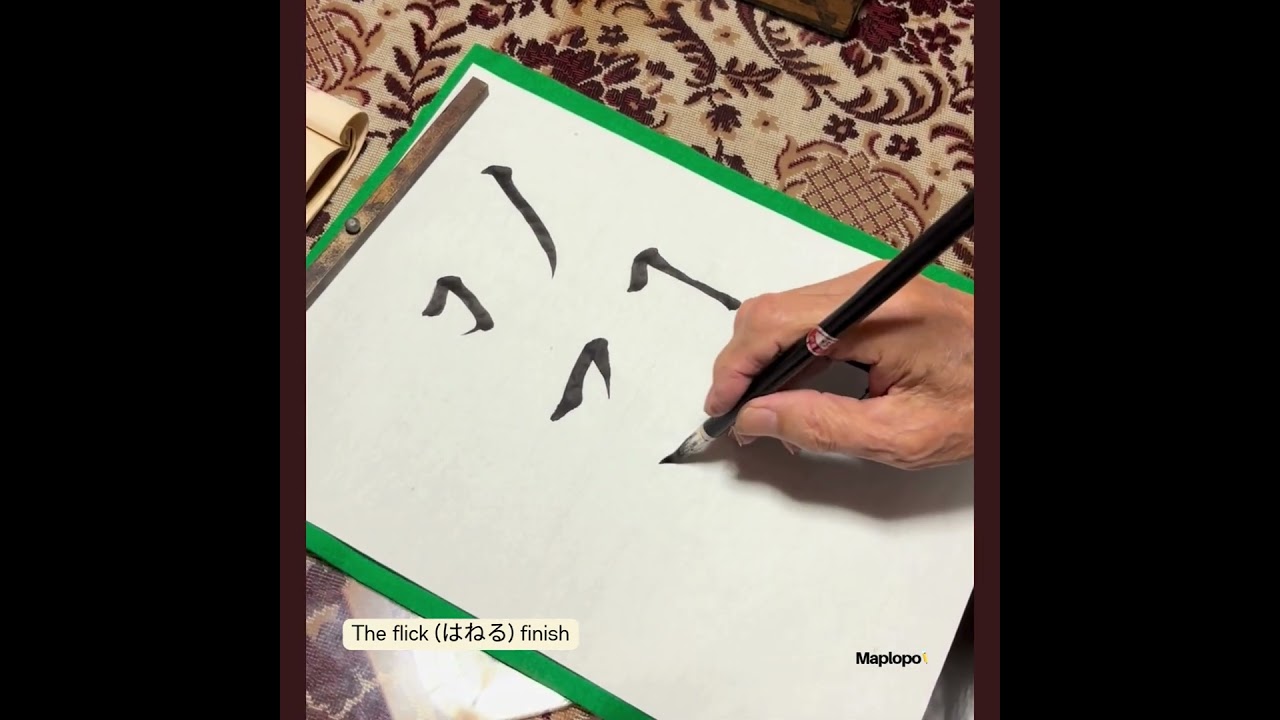
The finishing note of each kanji stroke holds a clue to its meaning. Font choices can mask a kanji’s finish, and a heavy reliance on touchscreens and keyboard conspire against us in what is otherwise a very effective way to sustain motivation and increase confidence when reading and writing Japanese.


“Through conversations with the teachers and other students, I quickly picked up the impression that I had best begin learning the kanji as soon as possible, since this was sure to be the greatest chore of all.”
The author of “Remembering the Kanji,” James W. Heisig might be right about the above statement; however, it’s less of a chore than most believe.
It is entirely possible to attain native proficiency in writing all 2,136 jōyō kanji if we remain aware of the amazingly consistent patterns that bring kanji to life, and of the fundamental truth that writing kanji is made a lot easier when we recognize they are simply made up of bunch of lines that exist in an imaginary square space.
Everything begins from a very simple form that rationally progresses to more complex forms. If we can nail the most simple, that means we can build the most complex over time.
Maplopo’s Next Level Kanji program is here to help. Join us and you’ll see just how important it is to actually use your own hand to write in order to help memory and associate meaning with form.
It all begins with the basics of the basics—strokes!
P.S. The calligraphy work is kindly done by Reiko’s father, a certified Japanese calligraphy teacher who is forever supportive of everything we do.